

What Ukraine Hides

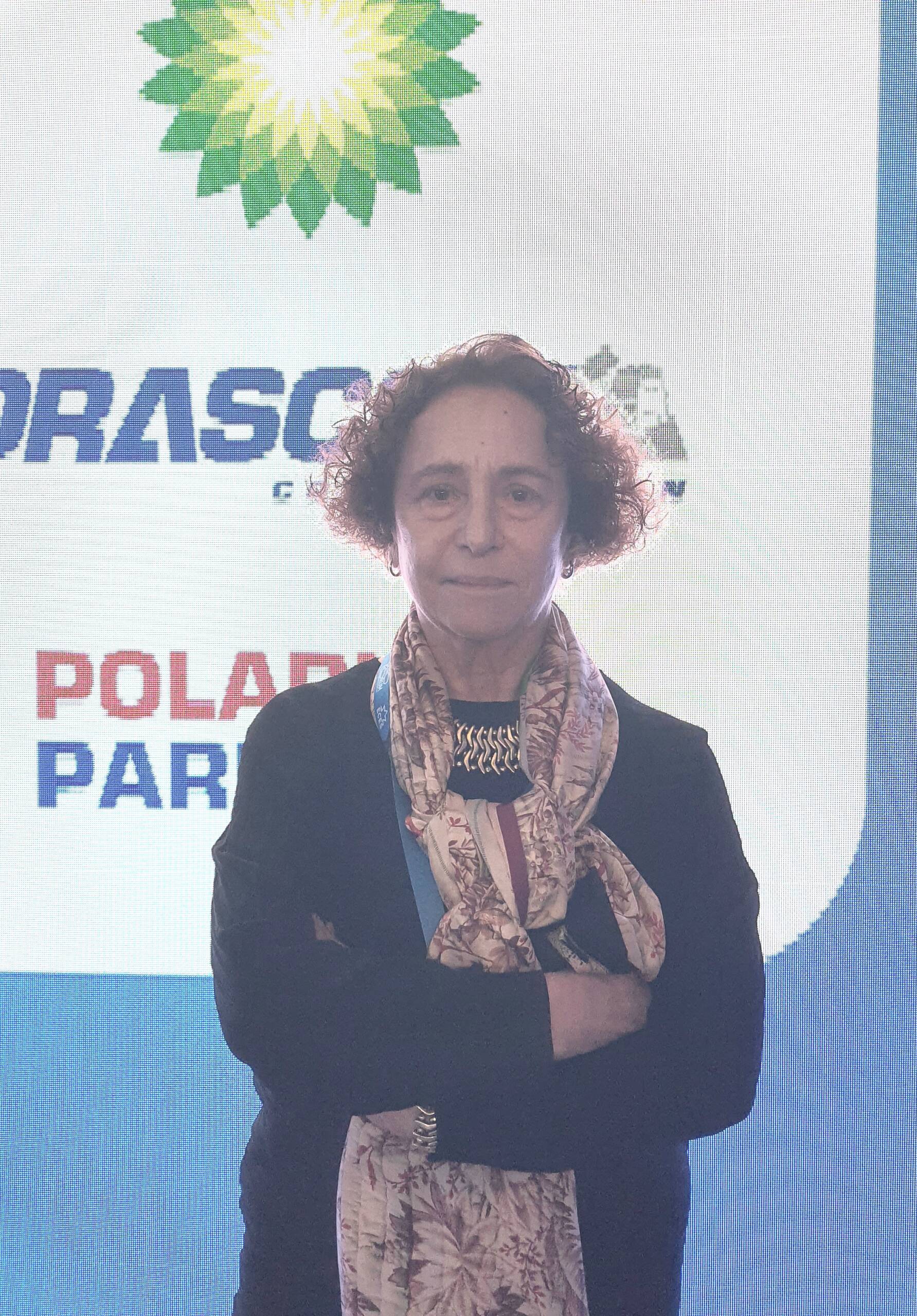
Ana Palacio
Published in El Mundo, 30 November 2025
For almost three years, the war in Ukraine reached our comfortable lives in Madrid, Rome, Athens—or even Stockholm—wrapped in multiple layers of narrative: the epic of resistance, the courage and ingenuity of the patriots “over there,” Western unity of purpose, European “solidarity,” the denunciation of Russian revisionism, the bet on future reconstruction, EU membership, and NATO projection.
Today, paradoxically, with negotiations as opaque as they are abrupt, the backstage of this drama is emerging in all its rawness. Our collective shames. The negotiation of discredit that is now taking shape does not stem solely from a sudden improvisation by the temperamental Donald Trump, although his style makes it more humiliating. It exposes Europe’s indigence and concludes a longer pattern applied by the Biden administration from the beginning: the policy of helping just enough so that Ukraine would not fall—but never enough for it to win. Meanwhile, Europeans have had neither the will nor the means to influence events.
The leak of the “American peace plan”—a 28-point document that linguistic analyses link to a draft originally written in Russian—has fully revealed the magnitude of the disaster. Alongside concessions incompatible with Ukraine’s strategic survival, some clauses stand out for betraying a profound conceptual dislocation. The most baffling: the invocation of the United States as a “mediator” between NATO and Russia.
A mediator cannot be a party. The formulation, absurd in diplomatic language, reflects the state of intellectual detachment in Washington from the Atlantic Alliance, trying to be simultaneously inside and outside it. It is the prelude to a feared withdrawal from the Euro-Atlantic core, not a procedural stumble. And the abrupt turn by Secretary of State Marco Rubio confirms the volatility of the moment; Trump does not delegate or maintain loyalties when they interfere with his own impulses or intuitions.
The European counterproposal—more sober, more legalistic, slower—has had no effective echo. Moscow has shut the door categorically. And from Washington the transactional logic prevails: secure a “cessation of hostilities” that can be presented to the international community, stabilize the front, extract an economic return, and move on.
A mediator cannot be a party. The formulation, absurd in diplomatic language, reflects the state of intellectual detachment in Washington from the Atlantic Alliance, trying to be simultaneously inside and outside it. It is the prelude to a feared withdrawal from the Euro-Atlantic core, not a procedural stumble.
In this situation, Ukraine’s position is more vulnerable than ever, not only because of the pressure being exerted. Its military activity depends entirely on American “eyes”: satellite intelligence, communications interception, target geolocation. Added to this is the digital infrastructure operated through Starlink, without which Ukrainian resolve would collapse. And Elon Musk will never make a decision that clashes with the American president’s. This asymmetry leaves Zelensky with a margin of maneuver that is, in practice, almost non-existent.
The outline of the agreement will be harsh for Ukraine. But beyond any merely formal or even sincere solidarity, from a selfish perspective it is worth stressing that it will be extremely onerous for Europe, because it exposes three weaknesses blurred by the war.
First: the disconnection between the gravity of the conflict and public opinion. Despite the understanding in Northern and Eastern Europe of the Russian threat in an uncertain world where force prevails, in most of the continent the war remains a televised spectacle, not an existential issue. In Spain or Italy a deeper commitment is not even considered; in France, a brief warning about the possible—remote but real—deployment of troops generated outrage, and President Macron is trying to raise awareness by announcing a “voluntary military service.” The gap between the circumstances we face and our social psychology is abysmal.
Second: the absence of leadership. Europe has no figure to articulate a vision. No Churchill, no de Gaulle, not even a Merkel to hold the structure together in difficult times. The President of the Commission is trying to occupy space after the embarrassing submission to Trump on the golf course last August. Von der Leyen seeks to expand prerogatives in defense matters, wielding control of the common purse as a lever of power and claiming a quasi-strategic role.
But it is the Council that determines what kind of defense we want, how to fill gaps, or how not to duplicate capabilities. And in this sphere, the national mindset prevails. Industrial coordination—essential for any credible progress—does not appear. Finally, the European Parliament, far from providing clarity, oscillates between a bulimia of competences and continuous confrontation with the Commission: repeated motions of censure, litigation before the Court of Justice of the EU, and votes that block even timid attempts at regulatory simplification. With institutions at odds, the Union does not advance. It reacts; it does not propose.
Third: the impossibility of sustaining the level of warfare that Ukraine—exhausted—needs. Kyiv has Europe’s most experienced army; the most advanced mesh of drones, autonomous swarms, and tactical adaptation. The Union does not remotely match its pace of innovation; it brandishes funds, declarations, and meetings, but lacks the stamina to produce ammunition, systems, drones, or interceptors at the tempo required by a high-intensity war. The gap between what is needed and what Europe can do is immeasurable.
The outline of the agreement will be harsh for Ukraine. But beyond any merely formal or even sincere solidarity, from a selfish perspective it is worth stressing that it will be extremely onerous for Europe, because it exposes three weaknesses blurred by the war.
To all this is added an uncomfortable truth: the United States has been warning of this ordeal for years. It is rightly stressed how, in his farewell to NATO in 2011, Obama’s Secretary of Defense Robert Gates warned that “American leaders—for whom the Cold War was not the formative experience it was for me—may consider that the investment […] is not worth it.” It was both a diagnosis and a warning. Trump, if anything, acts as an accelerator with his thuggish rhetoric. And what matters today is not some supposed American “political cycle”; it is that Europe has not equipped itself—militarily or industrially—with the minimum autonomy to avoid ultimately depending on Washington’s decisions.
That subordination now forces us to accept, with no real option to object, a pact that directly affects our security. For that reason, the coming peace—whatever its final formula—has a price that no one is explaining. For Ukraine, it will interrupt hostilities but freeze the line of control and de facto legitimize the partition of the country: a mutilated Ukraine, with a controlled army, without access to NATO. For Europe, it means confirmation of its lack of leadership and of a weak industrial and strategic base.
What Ukraine hides is, therefore, what we are. Europe is entering an era of extraordinary hardness with tools forged for a context of Pax Americana that no longer exists. The foreseen agreement settles no outstanding account; it opens a strategic bill that will condition our future, both internally and multilaterally. A Union subordinated to others’ decisions for its security not only lives precariously; it cannot aspire to influence the global order.
This peace—the epitome of the “art of the deal”—forces us to look the world in the face: Europe must be built strategically, without delay or pause. Or it will slide inexorably into irrelevance under others’ dictates.
ورقة النار الأخيرة هل تحمل صناديق الأقتراع خريف نتنياهو
في دهاليز السياسة التي لاتنام ثمة لحظات يبدو فيها الزمن وكأنه يحبس انفاسه بانتظار هبوط الو…